Supporting veteran mental health, mile by mile
How community support strengthens veteran mental health
Health insurance is often understood through transactions—claims, coverage, approvals. Blue Cross and Blue Shield (BCBS) Federal Employee Program (FEP) knows that for military and veteran communities, health is also shaped by belonging and support systems that don’t end when a deployment does. That’s why FEP supports veterans and their families, in meaningful ways—like helping them honor fallen comrades and fellow service members during the annual wear blue: run to remember, Marine Corp Marathon.
wear blue describes this investment as a year‑round partnership that helps serve a shared priority, combining physical activity, formal remembrance, and, most importantly, real human connection.
“Anybody can write a check and slap their logo on something… And that’s not what the team at Blue Cross Blue Shield has done… They have come alongside the community… telling our shared story, living their mission first,” said Melynda Weaver, Chief Development Officer, wear blue: run to remember.
Weaver notices that with BCBS, the partnership shows up in the moments that don’t feel like sponsorship at all—"team members are present, greeting people by name, and helping amplify the opportunity for veterans and families."
We service active and retired federal employees and one of the goals we have is to be able to give back to the communities that we serve and help them live healthier lives.
FEP sponsored the Marine Corps Marathon’s Remembrance Mile as a visible, on-the-ground way to honor those who died in service. Along this stretch, runners pass photos and names—turning a race into a moving memorial and giving participants a shared language for remembrance and support.
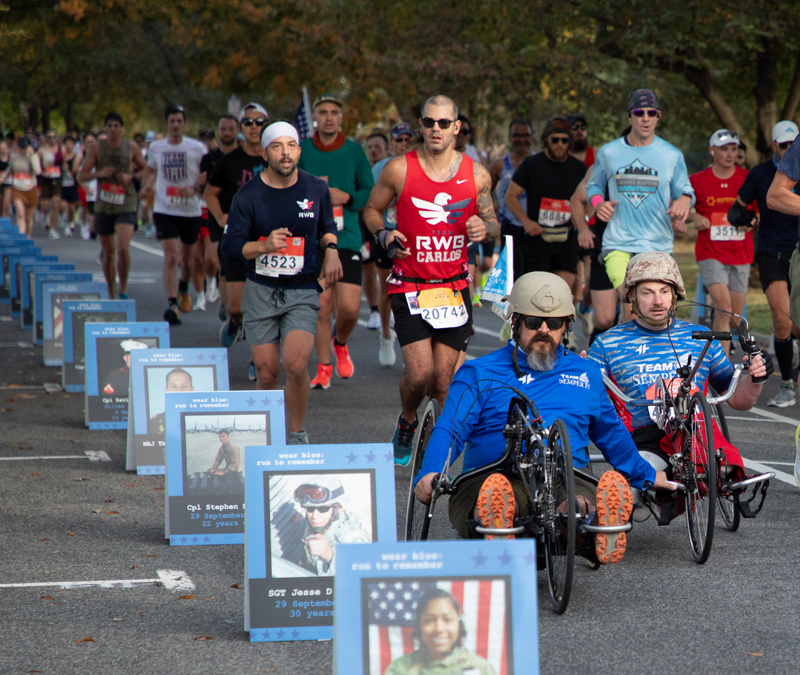
In the quiet approach to the mile, runners reflect—taking in each name, each face, each story. And then, as they move forward, the atmosphere shifts. Salutes are exchanged, cowbells ring and voices rise—runners and volunteers alike offering cheers and heartfelt thank-yous, a shared expression of gratitude and respect. Each moment of recognition carries weight with every step. It’s here that support from volunteers, including some from FEP, is not just remembered, but felt—out loud and in motion.
“When you stand on the wear blue tribute mile, it’s like being absorbed… into a memorial… you become a part of a living tribute because you’re sharing it as a community,” said Weaver.
Veteran mental health and the healing power of movement
For people navigating grief, community can be the difference between carrying loss alone and being carried forward together.
Weaver explains that while grief and loss are universal, in the military community they’re more frequent and more layered. Since 9/11, more U.S. service members and veterans have died by suicide and training accidents than in combat, and veterans face a suicide rate significantly higher than non‑veterans. That’s why normalizing healthy ways to live with grief, through remembrance, peer support, and movement, is essential. “We want veterans and military families to feel seen, supported, and never alone.”
A Runner’s Path to Healing and Strength
Runner, Jaime Bergin describes what that support can look like in practice: “When I lost my brother, I had a really tough time finding myself and finding my footing. I am grateful for a group of people that grieved and processed the same way that I did… in purposeful miles and steps, I’m able to process all of the grief putting in physical activity.”
Runners often describe the mile as a turning point. First comes the stillness—posters on both sides of the course, faces and names that pull your attention outward. Then comes the lift: American flags, cowbells and cheers that meet runners where they are and bring them back into community.
Memorial Day can bring pride, gratitude and tradition—but it can also bring hard memories to the surface. Spaces like the Remembrance Mile make intentional room for both. They invite people to feel what they feel, reflect without judgment, and move forward with others beside them.
Supporting veteran mental health: remember, reflect and connect
Memorial Day reminds us that remembrance is not passive—it’s something we practice. For the runners moving through the miles, for the families who see a face they recognize, and for veterans carrying stories that don’t always have an easy place to land, community can be part of the support system that makes healing possible. Through FEP’s sponsorship of the Remembrance Mile, BCBS is showing what it means to stand with the military community—not just as a payer, but as a partner in honoring sacrifice and supporting the living.
If Memorial Day brings up difficult feelings, you don’t have to go through it alone. Consider reaching out to someone you trust or a professional resource in your community. If you or someone you know needs immediate help, call or text 988 (and press 1 for the Veterans Crisis Line in the U.S.).
The latest in healthcare, delivered.
Subscribe to stay in the know on healthcare industry news and insights.